Monday, 27 June 2022

Logic of Testing Ho: 2

Logic of Null Hypothesis Statistical Significance (NHST)


मान लीजिये कि  


जीवसंख्या 

सैंपल 

1000 


100

Mean 

μ = 100

M = 97

SD 

  • σ

Ho

.                     M - μ = 0

  1. अर्थात प्राप्त सैंपल के मध्यमान एवं जीवसंख्या के मध्यमान में सार्थक अंतर नहीं है.


1. NHST की प्रक्रिया में हम यह ज्ञात करना चाहते है कि 

  • A . M - μ = 0 है अथवा 
B . M - μ 0.
  • A और B में चुनाव करने के लिए यह देखा जाता है कि यदि पापुलेशन का मध्यमान   μ है 
तब क्या. M एक सम्भाव्य (likely) प्राप्तांक है अथवा यह एक असम्भाव्य (unlikely) प्राप्तांक है.
  • यदि संभाव्यता अधिक है तब स्वीकार किया जायेगा. M - μ = 0
यदि असम्भाव्यता अधिक है तब स्वीकार किया जायेगा.    M - μ 0.  

2. सम्भाव्यता अथवा असम्भाव्यता को ज्ञात करने के लिए हम एक alpha  level (α) को तय करते हैं.  

आमतौर पर α= 5% पर तय कर लिया जाता है. 


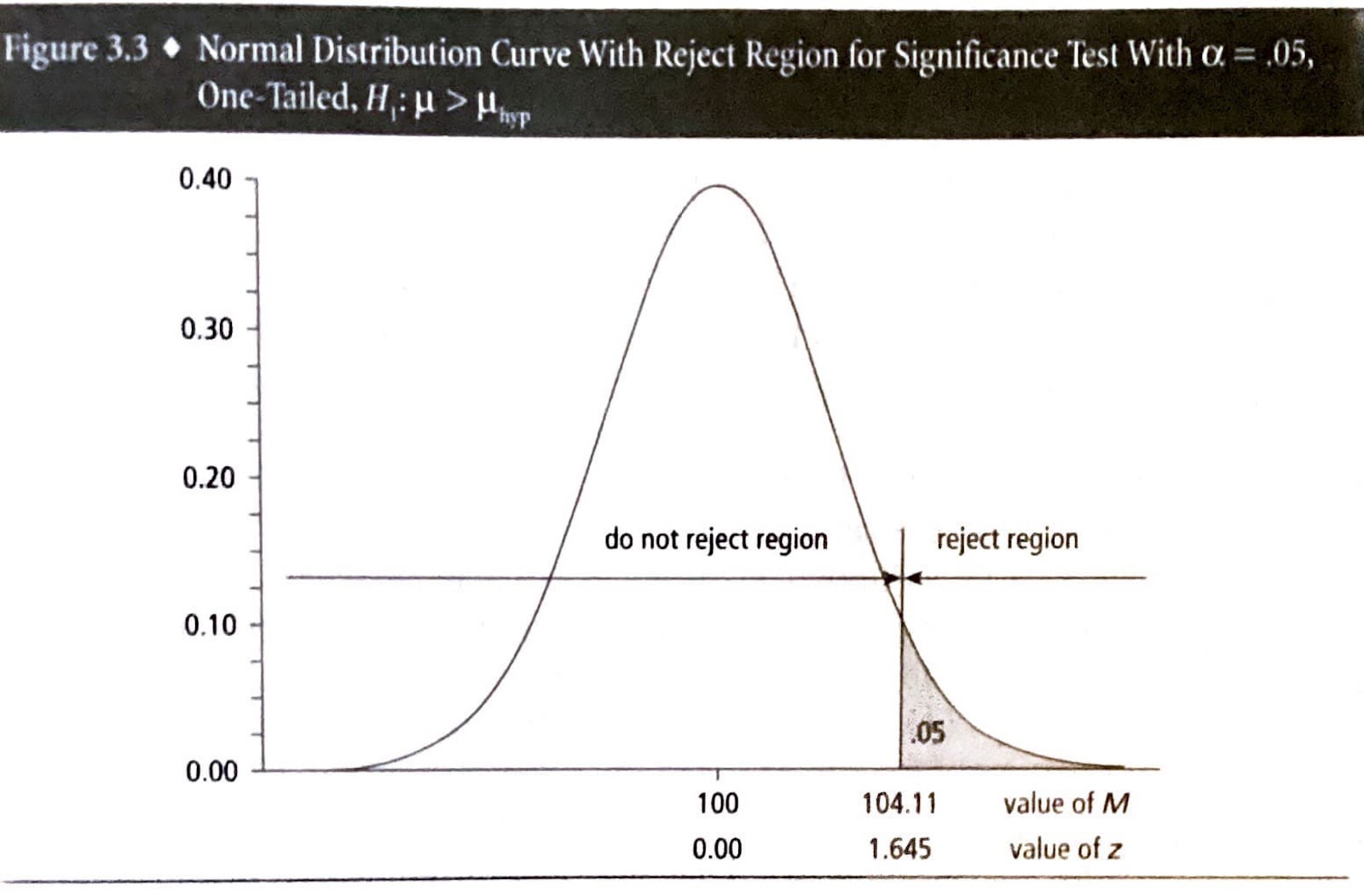
निम्न चित्र में प्रायिकता वक्र पर 5% वाले क्षेत्र को दर्शाया गया है.


Source    Warner, Rebecca M .


यदि . 

 μ = 100 है  

 σ =. 2.5 है 

Mo = 105 है 


तब हम Mo के संभाव्यता का निर्णय इस वक्र के माध्यम से कर सकते हैं. 

परन्तु उसके लिए पहले प्राप्त Mo को मानक अथवा z- स्कोर में परिवर्तित करते हैं.


जीवसंख्या से असंख्य सैम्पल्स प्राप्त किये जा सकते हैं और उतने ही M प्राप्त हो सकते हैं जिनका.  

मध्यमान = μ तथा मानक विचलन = σ होता है

Mo ऐसा ही एक प्राप्तांक है.

अतः Mo का मानक स्कोर होगा:

z =. (Mo - μ) / σ

= (105 - 100)/2.5 

= 2.00


प्रायिकता वक्र को देखने पर पता चलता है कि यदि Mo=104.11 तब उसके सामान z = 1.645 होगा. प्राप्त Mo का मान 105 है जो की 104.11 से अधिक है और उसके समानांतर z score का मान 2.00 है जो कि 1.645 से अधिक है. अतः प्राप्त Mo (105) की संभाव्यता मात्र 5% है. अतः प्राप्त Mo एक असम्भाव्य अथवा unlikely प्राप्तांक है. इसे हम एक random occurence मानकर अनदेखा नहीं कर सकते हैं. अतः हम यह मान लेते हैं कि Mo - μ का अंतर शून्य के समान नहीं है और दोनों में सार्थक अंतर है. अतः Ho को अस्वीकार कर लेते हैं.


दुसरे शब्दों में 

उपरोक्त उदहारण में चूँकि Mo =105 है जिसका z score = 2.00 है, अतः यह एक असम्भाव्य प्राप्तांक है.

इसलिए शुन्य परिकल्पना को अस्वीकार कर देते हैं.


तकनीकी रूप से इसका निर्णय हम यूँ लेते हैं:


Mo को z -प्राप्तांक में बदलते हैं.

प्राप्त z - score = z -obtained है.

प्रायिकता वक्र पर 0.05 के लिए z -critical = 1.645 है. 

यदि. z -obtaine > z -critical

तब Ho अस्वीकार्य है .


NB: z -critical के मान को दिए गए df एवं 0.05 के स्तर पर NPC के टेबल से देखा जा सकता है.


Sunday, 1 May 2022

Falsifiability Theory and Null Hypothesis

Falsificationism

Falsificationism was propounded by Karl Popper, a philosopher of Science. This theory evolved out of the debate over the Problem of Induction, that we have already seen in a separate blog (Inductiinism).

To understand Falsificationism we need to understand both the problem of induction as well as what we understand by hypothesis.

What is hypothesis?


               A hypothesis is an imaginative hunch by the scientist to explain some phenomenon, to show the relationship between certain conditions or some cause effect relationships.             According to Ayala (1994) hypothesis  must have four criteria viz.

a. It should have logical consistency in that it has no logical contradictions.

Suppose one hypothesise that since All A is X  since All A is P and All P is X. It is logically consistent since they follow the rules of logic.

b. It should have some explanatory power in that it tells something that make the phenomenon under consideration more comprehensible.

c. It should be consistent with the theories or knowledge related to the phenomenon under consideration that are already established, at least most of the times.

d. It should be testable i.e. the logical deductions or consequences derived logically from the hypothesis can be tested and are tested to establish the tenability of the hypothesis as an explanation. This condition thus represent the critical aspect of the hypothesis.

Falsification Theory

During the twentieth century, Karl Popper contributed towards the consolidation of the HDM through his falsification theory, that stands close to the idea that scientific method is basically deductive in nature.
        According to Falsification theory, the test of a scientific hypothesis is not its verifiability or its confirmation. Rather the test is the falsifiability of the hypothesis or its refutation. 

        The hypothesis formulated by the scientists as an explanation for a phenomenon, need to be "capable of being falsified through empirical observations" (ibid, p.228). Falsification is a better test for knowledge claims since Verification is always inconclusive, as was highlighted through the Problem of Induction by Hume. Verification process can yield innumerable instances of positive results, and yet it is always possible to have a negative observation that can challenge the validity of the conclusion. Innumerable instances of observation of swans and invariable observation of their white color can lead to the theory that “All Swans are white in color”. However, a single observation of black swan can make the theory skeptical or refute the theory. 
       As against such naive Inductivism, Popper favoured the hypothetical model of scientific method. The scientist creates hypothesis and through repeated efforts to falsify the hypothesis, the scientist is led towards new knowledge. 

        This falsification theory follows the procedure of using double negatives. First the scientists conjecture is expressed in a negative way. Logical deductions are derived from this hypothesis that are then tested to falsify them. If they are falsified, by observations that are contrary to the prediction, the scientists hypothesis is accepted as valid explanation.
     Thus science moves ahead through the process of falsification of hypothesis rather than through confirmation of the hypothesis. New knowledge emerges through falsification of the null hypothesis. Poppers favoured taste for falsification rather than confirmation was based on logical arguments.


Consider the syllogism:
 Modus Ponens.                                       Modus Tolens


If H then P.                                                     If H then P
P.                                                                     Not P
Therefore H                                             Therefore not H

  Popper argues that even through several instances of confirmation of P one cannot prove H to be true. There may be other reason why P is observed beside H. However, if we see the syllogism in B, a refutation of P necessarily shows that H cannot be true. Thus modus tollens is the syllogism that guides scientific method. Instead of imposing their own hypothesis, the scientists assume the no relationship hypothesis as true. They then make predictions from the null hypothesis. When predictions are not observed as expected, following modus tollens, the no relation hypothesis is refuted. Refutation of the null hypothesis leads to acceptance of the researcher hypothesis. If one fails to falsify the no relation hypothesis, it logically leads to unacceptability of the original hypothesis.
.               

Sunday, 24 April 2022

आलोचनात्मक शिक्षण (Critical Pedagogy)

आलोचनात्मक शिक्षण


     प्रस्तावना

 शिक्षा में उच्च आकांक्षा रखने वाले परीक्षा प्रणाली का ट्रेंड वर्तमान में पुनः एक बार हावी है. उच्च आकांछा परीक्षण प्रणाली से तात्पर्य उस प्रणाली से है जिसमे निर्धारित अधिगम उद्देश्यों के द्वारा सीमित दायरे में ही शिक्षण कार्य को पूरा किया जाता है एवं अनुशासित ढंग से उन्हीं उद्देश्यों को आधार बनाते हुए परीक्षण किया जाता है. इस प्रकार के परीक्षणों का अपना अलग महत्त्व है. यह निश्चित तौर पर शिक्षा  एवं परिक्षण कार्यक्रमों को व्यवस्थित करता है एवं उसे वस्तुनिष्ठ बनता है. परन्तु इस प्रणाली की अपनी कमियां भी है. सर्वप्रथम यह विद्यार्थियों में स्मृति आधारित मानसिक प्रक्रियाओं को अधिक प्रोत्साहित करता है जिससे की विद्यार्थी परीक्षा में उच्च अंक प्राप्त कर सकें. विद्यार्थियों द्वारा प्राप्त किये जाने वाले अंकों को ही शिक्षा के गुणवत्ता का प्रमाण मान लिया जाता है. वहीँ दूसरी ओर  शैक्षिक उद्देश्यों के निर्धारण की प्रक्रिया में समर्थवॉन एवं इस प्रक्रिया के लिए उत्तरदायी व्यक्तियों की अपनी सोच एवं हित  उनके निर्णयों को प्रभावित करते हैं. अक्सर इस प्रकार की शिक्षा व्यवस्था संरक्षणवादी शिक्षा का रूप ले लेती है और विद्यार्थी उच्च कोटि के मानसिक विकास से वंचित रह जाते हैं. विद्यार्थियों को वस्तुस्थिति को स्वयं से समझने परखने और विवेचित करने का अवसर नहीं मिल पता है. शिक्षा के इन कमियों को दूर करने के लिए फ्रेरे ने आलोचनात्मक शिक्षण के अवधारणा को प्रस्तुत किया था. 


       फ्रेरे का मानना था कि  ज्ञान अथवा विचारों अथवा सामजिक रीतियां और नियम को गैर आलोचनात्मक ढंग से स्वीकार कर लेना ही समाज में एक समूह के द्वारा दुसरे समूह के उत्पीड़न एवं वंचित रखने का कारण बनता है. सभी प्रकार के उत्पीड़न के मूल में मौन स्वीकारोक्ति की संस्कृति है. अपने समय के शिक्षा व्यवस्था को वे इस मौन संस्कृति को विकसित करने के माध्यम और सामजिक बुराइयों के स्त्रोत के रूप में देखते थे.  


       फ्रेरे शिक्षा के प्रचलित व्यवस्था को “शिक्षा की बैंकिंग प्रणाली” के नाम से उद्बोधित करते हुए कहते हैं की इस प्रकार की शिक्षा ज्ञान-स्थानांतरण के सिद्धांत पर आधारित होता है एवं यह स्मृति आधारित अधिगम  को बढ़ावा देता है. फ्रेरे के अनुसार इस प्रकार की शिक्षा ज्ञान के सृजन को हतोत्साहित करते हुए विद्यार्थियों के सामाजिक एवं मानसिक विकास को अवरूद्ध करता है. अत इस प्रकार के शिक्षा द्वारा मौन रहने की संस्कृति का पोषण होता है तथा कालांतर में वही विद्यार्थी या तो इस तथ्य से ही अनभिज्ञ रह जाता है कि  उसके अधिकारों का हनन हुआ है अथवा ज्ञात होने पर भी वे मौन रह जाते हैं. शिक्षा सामजिक श्रेणीबद्धता में सामर्थ्य एवं उच्च श्रेणी के लोगों द्वारा उत्पीड़न एवं वंचन का माध्यम बनकर रह जाता है. इस प्रकार के शिक्षा के विपरीत उन्होंने आलोचनात्मक शिक्षण के सम्प्रत्य को प्रस्तुत किया.


आलोचनात्मक शिक्षण 

          फ्रेरे के अनुसार आलोचनात्मक शिक्षण शिक्षा का एक समालोचनात्मक उपागम है जिसमे विद्यार्थी सक्रीय रूप से अधिगम प्रक्रिया में संलग्न होते हैं एवं विषयवस्तु सम्बंधित स्वयं के विचारों एवं परिप्रेक्ष्यों को प्रस्तुत करने, विश्लेषित करने एवं निर्णय लेने के लिए स्ववतंत्र होते हैं. इस प्रकार की शिक्षा शिक्षक-विद्यार्थी के मध्य संवाद (dialogue) तथा विद्यार्थियों द्वारा समस्या प्रस्तुतीकरण  में संलग्नता (problem  posing ) के माध्यम से प्राप्त करने की वकालत की जाती है. विद्यार्थियों को शिक्षा के वस्तु  के रूप में नहीं देखा जाना चाहिए. अपितु उन्हे स्वतंत्र चिंतन करने वाले एवं अपने स्वतंत्रता के मार्ग को स्वयं चुनने के क्षमताओं  वाले एक व्यक्ति के रूप में देखने  की वकालत की जाती है. 

इस प्रकार के व्यक्तित्व के विकास के लिए आलोचनात्मक शिक्षण प्रणाली उपयुक्त है. यह उन्हें प्रश्न करने, संवाद करने, अपने परिप्रेक्ष्यों को व्यक्त करने के कैशलों से युक्त करता है. यह विद्यार्थियों में सामाजिक परिवर्तन लाने की क्षमता को विकसित कर सकता है.


    इस उपागम के दो महत्वपूर्ण विधाएँ हैं: 


समस्या खड़ा करना (Problem -posing ) 


इस विधि में कक्षा में विद्यार्थियों को प्रश्न करने एवं अपने प्रश्नों को प्रस्तुत करने के लिए प्रोत्साहित किया जाता है. इसके उपरान्त मानसिक उद्वेलन (Brain-Storming) द्वारा प्रारम्भिक समाधान विद्यार्थियों के द्वारा प्रस्तुत किया जाता है. इन प्रारम्भिक उपायों पर सामूहिक संवाद द्वारा उसे और परिष्कृत कर एक सर्वसम्मत समाधान को निर्मित किया जाता है. 


संवाद (Dialogue )


यह अति प्राचीन विधा है जिसका प्रारम्भ पश्चिम  में सुकरात से माना जाता है. इस विधा में संवाद को महत्त्व दिया जाता है जो शिक्षक एवं विद्यार्थियों के  मध्य एक दुसरे पर आस्था रखते हुए संपन्न किया जाता है. इसके द्वारा विद्यार्थी आलोचनात्मक ढंग से ज्ञान के साथ अंतर्क्रिया कर सकते है एवं उसे अपने जीवन के यथार्थ के साथ जोड़ते हुए होने परिप्रेक्ष्य को प्रस्तुत कर सकते हैं. वहीँ दूसरी और विद्यार्थी अन्य विद्यार्थियों के पाइपरएकशय को भी समझ सकते हैं. 


इन दोनों विधाओं के माध्यम से विद्यार्थियों में उच्च श्रेणी के चिंतन कौशलों का विकास किया जाता है. मौन रहने की संस्कृति ही उत्पीड़न एवं वंचन का मूल स्त्रोत है एवं आलोचनात्मक शिक्षण के द्वारा विद्यार्थियों में प्रश्न पूछने, अपनी बातों को तार्किक ढंग से रखने, दूसरों के परिप्रेक्ष्य को समाहित  करने के कौशलों को विकसित कर सकते हैं जो अंतत उनमे आलोचनात्मक चिंतन के कौशल को विकसित कर सकता है. 


निष्कर्ष 

शिक्षा में मतारोपण का बढ़ता प्रभाव शिक्षा के वास्तविक उद्देश्य के लिए एक गंभीर समस्या है. शिक्षा के सैंडस्रभ में फ्रेरे द्वारा प्रस्तुत की गयी आलोचनाएं समीचीन हैं. विशेषकर उभरते ज्ञान आधारित समाज एवं अर्थ व्यवस्था में शिक्षा स्वयं पृथक्कीकरण का कारण बन सकता है. यदि हम भावी समाज हेतु जागरूक एवं आलोचनात्मक व्यक्तित्व का विकास नहीं करते हैं तो यह प्रजातंत्र के मूल ढाँचे को ही कमजोर बना सकता है. वर्तमान में विश्व के कई देशों में बढ़ते उत्पीड़न के पीछे कहीं न कहीं शिक्षा द्वारा इस महत्वपूर्ण लक्ष्य को प्राप्त करने में उसकी विफलता ही है. अतः क्रिटिकल पेडागाज़ी की प्रासंगिकता वर्तमान के परिदृश्य में और बढ़ जाती है. 


Sunday, 17 April 2022

Rationalism

Rationalism  


Philosophers such as Descarte, Liebniz, etc were rationalist and considered that true knowledge is a-priori knowledge. A prioi knowledge is that which has it's source in reason alone. It is unlike the empiricism who consider true knowledge as being a-posteriori. The question now arises that is there no element of a prior knowledge in science, where a priory knowledge is the knowledge that the rationalist claim as the real knowledge. 

Rationalism believes in apriori knowledge

A prior knowledge stands for knowledge that has it's source in reason alone. Mind with it's reasoning capacity can lead to true knowledge that do not require sensory confirmation. Such knowledge are certain as well as generalized. 

Rationalism propounds Deterministic knowledge

Eempirical knowledge is probabilistic in nature. Empiricist method is inductive and inductive process leads to probabilistic knowledge. Rationalist method uses deduction and deduction leads to certain knowledge. There are no exception since exception leads to contradiction.


Sunday, 30 January 2022

HD Method

                            HYPOTHETICO DEDUCTIVE METHOD

  HDM involves a two tier system of hypothesis (Trotta, et., al., 2013). A more general hypothesis is hierarchically created at the higher level to explain certain set of observational data. At the second level in the hierarchy there are one or more hypothesis that are deductively created as consequences considering the hypothesis at level one to be true. These deductively arrived consequences are subjected to further observation and experimentation to verify them. The validity of the tier I hypothesis depends upon the verification of tier II hypothesis. Thus we can say that HDM involve a system of hypothesis.

    In a nutshell the method can be represented as follows:

a. Hypothesising

Scientists faced with some explanation problem, makes a bold gesture and proposes a hypothesis as a tentative explanation for some set of observational data. 

b. Deduction

The hypothesis is taken as a truth premise and following deductive reasoning, the scientist make certain predictions. These predictions are logical consequences if the tier I hypothesis is taken to be true. The predictions are themselves hypothetical statements (Tier II). The tier II hypothesis or the predictions or consequences emanating from tier I hypothesis are more specific.

c. Observation

The tier II hypothesis are empirically tested I.e. the consequences deduced need to be examined against the real world processes. The observational data decides the fate of the tier I hypothesis- whether it is to be accepted as a theory, modified or discarded. 
The three phase scientific method is termed as the Hypothetico-deductive method (HDM) that shows the hypothetical nature of SM. 

    The general pattern of reasoning goes like this.

H is……………………………………………………..lHypothesis/Creative phase
If H (hypothesis) then P (predictions)……………..Deduction phase
P is……………………………………………………..Observation/Testing Phase
Therefore H……………………………………………Conclusion

Sunday, 9 January 2022

What is a Discipline

डिसिप्लिन: अर्थ

    डिसिप्लिन शब्द उत्पत्ति लैटिन शब्द डिसिपुलस(discipulus) से है जिसका तात्पर्य होता है शिक्षार्थी। कुछ अन्य लोगों का मानना है कि इसकी उत्पत्ति लैटिन शब्द डिसिप्लीनिया (disciplinia ) से है जिसका तात्पर्य है शिक्षण। अत व्युत्पत्तिशास्त्र के आधार पर डिसिप्लिन शब्द का अर्थ विद्यार्थियों अथवा शिक्षण होता है।

डिसिप्लिन : परिभाषा


साधारण तौर पर डिसिप्लिन को मानव ज्ञान के सम्पूर्ण पुरालेख अथवा भण्डार के एक वर्ग के रूप में परिभाषित किया जा सकता है।  मानव सभ्यता द्वारा अर्जित ज्ञान के सम्पूर्णता को सम्प्रेषण (communication ), प्रबंधन (management ) एवं आशोधन और विकास (refinement and development)  हेतु कुछ निश्चित मानकों के सापेक्ष वर्गीकृत किया गया है। इस वर्गीकरण के फलस्वरूप प्राप्त ज्ञान के विशेष वर्ग को ही डिस्कॉपलीलीने कहा जाता है। 


ज्ञान वर्गीकरण के  आधार


ज्ञानं के किसी वर्ग को डिसिप्लिन के रूप में स्थापित होने  के लिए यह आवश्यक है की ज्ञान का वह वर्ग या प्रणाली डिसिप्लिन के प्रकृति के अनुरूप कुछ शर्तों को पूरा करता हो। आवश्यक शर्तें जो डिसिप्लिन के प्रकृति को स्पष्ट करती है वो हैं 
  1. ज्ञान के क्षेत्र एवं विषय वास्तु की विशिष्टता (
  2. ज्ञानोपार्जन विधियों की विशिष्टता। 
  3. ज्ञान के विशेष क्षेत्र में व्यापक समस्याओं अथवा सरोकारों की वंशावली। 
  4. क्षेत्र विशेष में स्थापित एवं अनुमोदित बुद्धिजीवियों का समुदाय

विषयवस्तु/क्षेत्र  विशिष्टता


ज्ञान के कई स्वरूप होते हैं जैसे कि तथ्य (facts), संप्रत्य (concepts), अंतर्संबंध (relationships), परिकल्पना (hypothesis), सिद्धांत (theory),इत्यादि।ज्ञान के ये विभिन्न स्वरूप मिलकर किसी डिसिप्लिन के ढांचे को प्रस्तुत करते हैं। अत किसी डिसिप्लिन का संरचना उस डिसिप्लिन के विशिष्ट तथ्यों, संप्रत्यायो, सिद्धांतों इत्यादि के द्वारा निर्मित होता है। 

द्वितीय ज्ञान संरचना उस सिद्धांत  की भी अभिव्यक्ति होती है जिसे आधार बनाकर डिसिप्लिन के विशिष्ट ज्ञान स्वरूपों को संगठित किया जाता है।  उदहारण के लिए विज्ञान में ज्ञान संगठन का आधार कारण-प्रभाव सिद्धांत होता है वहीँ इतिहास विषय को देखें तो उसमें संगठनात्मक सिद्धांत  के रूप में कालकरंबढ़त  अपनाया जाता है।

अंतत डिसिप्लिन का ज्ञान संरचना उस डिसिप्लिन के धातुभाषा (metalanguage) जो कि प्रत्येक डिसिप्लिन के लिए विशिष्ट होता है, को  भी प्रस्तुत करता है। 

2. डिसिप्लिन तथा अन्वेषण विशिष्टता

   
डिसिप्लिन ज्ञान का एक  गत्यात्मक (dynamic) प्रणाली होता। है डिसिप्लिन में वर्गीकृत ज्ञान स्थिर नहीं होता है।  डिसिप्लिन में नित्य ज्ञान का परिमार्जन एवं नए ज्ञान का संवर्धन होता रहता है। अत:  डिसिप्लिन मात्र ज्ञान रुपी उत्पाद को प्रस्तुत नहीं करता है अपितु यह ज्ञान संवर्धन और ज्ञान आशोधन सम्बंधित प्रक्रिया का भी द्योतक होस्वरूप ता है। यहां डिसिप्लिन का प्रक्रियात्मक पक्ष उस डिसिप्लिन में ज्ञान सम्बंधित अन्वेषण विधि को प्रतिबिम्बित करता है। प्रत्येक कईडिसिप्लिन में अन्वेषण की अपनी विधि होती है जो उस डिसिप्लिन की विशिष्टता होती है एवं उसे अन्य डिसिप्लिन से भिन्न बनाता है। 

किसी डिसिप्लिन का अन्वेषण अथवा शोध विधि उस डिसिप्लिन में मान्य चिंतन परंपरा और तर्क प्रणाली को व्यक्त करता है । चिंतन के इस परंपरा तथा तर्क के इस प्रणाली को मूल्य के रुप मे उस डिसिप्लिन से संबंधित समुदाय  द्वारा स्वीकार किया जाता है।  इन्हीं मूल्यों के आधार पर डिसिप्लिन संबंधित समुदाय ज्ञान की विवेचना करते हैं तथा ज्ञान के वैद्यता संबंधित निर्णय लेते हैं।

3. डिसिप्लिन तथा समस्याओं की काळक्रमबद्धता  


 डिसिप्लिन के दो पक्ष होते हैं। प्रथम यह उत्पाद स्वरुप ज्ञान को परिलक्षित करता है तथा साथ साथ प्रक्रिया स्वरुप ज्ञान-सृजन एवं ज्ञान-संवर्धन की  विधि को भी प्रस्तुत करता है। किसी कालखंड में डिसिप्लिन के समक्ष कुछ व्यापक प्रश्न अथवा समस्याएँ  होती हैं एवं सम्बंधित समुदाय डिसिप्लिन-विशेष की विधि के अनुरूप उस समस्या  का समाधान ढूंढते हैं। इस प्रक्रिया में  नए ज्ञान का  सृजन होता है और स्थापित ज्ञान का संवर्धन होता है। 

परन्तु किसी एक कालखंड में शोध  समस्याएं अथवा प्रश्न किसी दुसरे कालखंड के शोध समस्याओं से स्वतंत्र अथवा पूर्णतया पृथक नहीं होते  हैं।  अपितु किसी विशेष काल  की समस्याएं ज्ञान रुपी नए समा रूपधान  प्रस्तुत करते हैं और इस नए ज्ञान से पुन: नयी समस्याएं और नए प्रश्न उत्पन्न होते हैं और यह प्रक्रिया इस प्रकार चलती रहती। है।

निष्कर्षत: विभिन्न काल खंड में डिसिप्लिन के व्यापक समस्याओं में एक काळक्रमबद्धता परिलक्षित होता है। डिसिप्लिन की यह  काळक्रमबद्धता डिसिप्लिन को निरंतरता (continuity) प्रदान करती है और प्रश्नों के इस काळक्रमबद्धता के कारण डिसिप्लिन के विभिन्न  पीढ़ियों में अन्तर्सम्बन्ध स्थापित होता है। 

4.समुदाय के रूप में डिसिप्लिन


कोई भी स्वीकृत डिसिप्लिन किसी क्षेत्र विशेष में संलग्न बुद्धजीवियों के समुदाय का प्रतिनिधित्व करता है जिनमे कुछ साझा लक्ष्य होते हैं, ज्ञानार्जन के किसी विशेष ओआरम्परा से सम्बद्ध होते हैं तथा उनके अपने साँझ मूल्य होते हैं जो उनकी गतिविधियों और क्रियाकलापों को मार्गदर्शित करता है। दूसरे शब्दों में दिससीओलिने एक ऐसे समुदाय को व्यक्त करता है जिनकी सोच तथा कार्यप्रणाली डिसिप्लिन के संप्रत्यात्मक संरचम और चिंतन के विशेष परंपरा में अनुशाषित हो।

संक्षेप में कहा जा सकता है कि:

*  डिसिप्लिन मानव सभ्यता द्वारा अर्जित एवं संचयित ज्ञान के वर्गीकरण से उत्पन्न एक वर्ग होता है।

* डिसिप्लिन के दो महत्वपूर्ण पक्ष होते हैं - ज्ञान संरचना तथा ज्ञानार्जन की विधि जी मिलकर किसी डिसिप्लिन को विशिष्टता प्रदान करते हैं, उसके स्वभाव को वर्णित करता हैं तथा उसे अन्य डिसिप्लिन से भिन्न करते हैं। 

* ज्ञान के एक वर्ग के रूप में प्रत्येक डिसिप्लिन के मूल में क्षेत्र विशेष से संबंधित ज्ञान की एक प्रणाली/संरचना होती है जो कि उस क्षेत्र विशेष के घटनाओं तथा प्रक्रियाओं को समझने में (comprehend), उसकी व्याख्या करने में (explaination)  और उसका अनुमान लगाने में  (prediction) सहायक होती है। 

* प्रत्येक डिसिप्लिन की  ज्ञान संबंधित  अपनी विशिष्ट मान्यताएं होती हैं जो उस डिसिप्लिन के शोध कार्यों को दिशानिर्देशित करते हैं और शोध परिणामों के मूल्यांकन हेतु आधार प्रदान करते हैं। 

* ज्ञान के किसी क्षेत्र को डिसिप्लिन का दर्जा प्राप्त होने के लिए उपरोक्त दोनों ही शर्तों का पूरा होना अनिवार्य होता है।
**********************************************


Wednesday, 29 December 2021

Writing Definition

Educational Ideas

Defining Something

What is a Definition?


The action of describing, explaining or making definite and clear some word or word group or phrase etc.
Thus we can have definition for several educational words such as teaching, learning, education itself and so on. We also have definition for educational phrases such as Educational technology, Information and Communication Technology etc.

What are the different approaches to define something?

There are several approaches to define a word or phrase. Two distinct approaches among them could be
A. Statement-Explication Approach
B. Explication-Conclusion Approach

What is the Statement Clarification Approach?

In this approach we can present a definition first. Remember a definition is a usually a concise and precise statement containing the essential features of the thing/word being defined. It can be normative or descriptive. The concise statement is followed by a clarification of the different terms used in the statement and their interrelationships.

How can we illustrate this approach?

Let’s start with a definition of teaching

S: Teaching is retrieval of knowledge in a new form through a triadic interaction between content, teacher and students to further students learning.

C: Teaching is inseparably related to learning. It aims to further the learning among students and learning may include skill developments knowledge enrichment or attitudinal changes. The process involves sort of interaction among the three important elements viz the content around which the teaching learning process is configures, the teacher and the student. Thus we have, in the words of T. Human, a triadic interaction that constitute the process. Irrespective of whether a teacher centric or student centric approach is followed, the teacher has a crucial role in designing the process. The difference in different approaches is manifested in different role for the teacher. However, in either case, the teacher has certain knowledge or skill component in a particular form organized in the discipline according to the organisational principle normatively accepted in the discipline. The knowledge as such is not compatible for the learners. The teacher has to reproduce the knowledge taking in view several factors including the student characteristics. The teacher has to use logical and psychological principles to retrieve the knowledge in a new form that is compatible for learners to digest. Thus we can say that teaching in any approach minimally involves a reproduction of the knowledge i.e. retrieving the knowledge ina new form with a new configuration that is accepted and conveniently organized by the learners.

How can we illustrate the Clarification-Statement Approach?

Let’s see the second approach to define something, say curriculum.

C: Education is a comprehensive phenomenon. It is both formal, as well as nonformal in nature. Within a formal setup education catalyses the learners development in accordance to well deliberated goals. The formal education is itself a systematic process hierarchically organized and sequentially implemented. Curriculum is the operational manifestation of the educational principles philosophised at some particular level in some particular context. Further, the educational processes are thematically ategorised into different groups to facilitate its planning and transaction as well as it’s valuation and further improvement. We usually call these categories as courses. The educational goals are realised through the implementation and evaluation of these courses. Thus education, at a particular level in a particular context represents a vision and the different courses are considered as the planned, practical and pertinent operations to realise the vision. Therefore we can justifiably define curriculum as

S: a set of courses designed and implemented by an educational institute to attain some specialized educational vision.

Wednesday, 12 May 2021

प्राविधिक प्रतिमान: हिल्डा ताबा प्रतिमान

हिल्डा ताबा प्रतिमान

इनका प्रतिमान टाइलर के प्रतिमान का संशोधित रूप है जिसे जमीनी स्तर  (Grassroot Level) का प्रतिमान भी माना जाता है। यह प्रतिमान कुछ मूल मान्यताओं पर आधारित है  जैसे कि


मान्यताएँ

• पाठ्याचार्य  पुनर्निर्माण की प्रक्रिया एक लंबी चलने वाली तार्किक और क्रमबद्ध प्रक्रिया है। (इस मान्यता के आधार पर इनके प्रतिमान को प्राविधिक प्रतिमान की श्रीखले में रखा जाता है)। अतः यह प्रतिमान टाइलर के रेखीय प्रतिमान या पाठ्यचर्या विकास के रेखीय पद्धति को स्वीकार नहीं करते हैं।
• यह प्रक्रिया नीचे से ऊपर की ओर चलती है ना कि ऊपर से नीचे कि ओर जैसा कि टाइलर का प्रतिमान प्रस्तुत करता है। 
• पाठ्यचर्या पुनर्निर्माण प्रजातांत्रिक सहभागिता के सिद्धांत का पालन करते हुए किया जा सकता है जिससे कि इस प्रक्रिया में शिक्षक का महत्वपूर्ण भूमिका होने चाहिये एवं इस प्रक्रिया में वे में रूचि  भी रखते हैं और इस कार्य हेतु वे कुशल  भी माने जा सकते हैं। 

प्रतिमान

हिल्डा ताबा पाठ्यचर्या पुनर्निर्माण को सात सोपान वाले प्रक्रिया के रूप में प्रस्तुत करते हैं जो कि  निम्नलिखित हैं

1. विद्यार्थियों के आवश्यकताओं के विश्लेषण (Need Analysis)

* विद्यार्थियों के आवश्यकताओं का  विश्लेषण  करना इस प्रतिमान का प्रथम सोपान होता है। 

* इस कार्य को शिक्षक बेहतर ढंग से कर सकते हैं क्योंकि वे विद्यार्थियों के सीधे संपर्क में होते हैं। 

उदाहरण के लिए किसी शैक्षिक संदर्भ में विश्लेषण द्वारा यह ज्ञात होता है कि विद्यार्थियों में आई0सी0टी0 कौशलों को विकसित करने की आवश्यकता है। 

2. उद्देश्यों के निरूपण

आवश्यकता निर्धारण के उपरांत उससे संबंधित उद्देश्यों को निरूपित किया जाता है। 

यही उद्देश्य आगे के सोपानों को भी निर्धारित करते हैं। 

3. विषयवस्तु का चयन

उद्देश्यों की प्राप्ति के लिए उपयुक्त विषयवस्तु का चयन किया जाता है। 

विषयवस्तु चयन में विद्यार्थियों के परिपक्वता स्तर और उनके पूर्व ज्ञान को ध्यान में रखा जाता है।

4. विषयवस्तु का संगठन

विषयवस्तु के चयन के बाद उसके संगठन से संबंधित निर्णय लिए जाते हैं। 

पुनः विद्यार्थियों के मानसिक स्तर, उनके रुचि और उनके पूर्व ज्ञान के साथ-साथ विषयवस्तु की प्रकृति को भी ध्यान में रखते हुए संगठन संबंधित निर्णय लिए जाते हैं।

5. अधिगम अनुभवों का चयन

चयनित एवं संगठित विषयवस्तु के कक्षा कक्ष सम्पादन हेतु उनको उपयुक्त अधिगम अनुभव में रूपांतरित किया जाता है।

इस प्रक्रिया में अनुदेशन विधियों का विश्लेषण, विद्यार्थियों के सामाजिक सांस्कृतिक पृष्ठभूमि का आकलन और  संसाधनों की उपलब्धि इत्यादि विषयों का विश्लेषण कर उचित निर्णय लिये जाते हैं।

6. अधिगम अनुभवों का संगठन

इस सोपान के अंतर्गत नियोजित अनुभवों के संगठन को सुनिश्चित किया जाता है। 

विभिन्न संगठन सिद्धांतों (जैसे कि मनोवैज्ञानिक अथवा तार्किक) के विषय मे  निर्णय  लिए जाते हैं।

 यह भी ध्यान रखा जाता है कि अनुभवों के संगठन सिद्धांत  और विषयवस्तु के संगठन सिध्दान्त एक दूसरे के पूरक हों।

7. मूल्यांकन

इस सोपान में पाठ्यचर्या निर्णयों जैसे कि विषयवस्तु चयन, अधिगम अनुभव का नियोजन इत्यादि के उपयुक्तता, सार्थकता और उनके प्रासंगिकता के संदर्भ में पता किया जाता है जिसके लिए विभिन्न प्रकार के मूल्यांकन प्राविधियों के  विषय में निर्णय लिए जाते हैं।


Thursday, 18 March 2021

Knowledge n Curriculum: Introduction

                                                  Knowledge and Curriculum
                                                          ज्ञान एवं पाठ्यचर्या
                                                                                                          Ajeet Kumar Rai


 ज्ञान मानव सभ्यता की एक अनमोल धरोहर है। चार हज़ार वर्षों से अधिक के मानव सभ्यता के इतिहास में ज्ञान के पूर्वोत्तर संवर्धन द्वावर विकास होता आया है एवं वर्तमान में मानव सभ्यता में ज्ञान का एक समृद्ध एवं विस्तारित भंडार नियोजित और संगठित है जिसकी वृद्धि में निरंतरता एक विशिष्ट गन है। यद्यपि ज्ञान का एक सर्वसम्मत परिभाषा प्राप्त करना दुष्कर कार्य है, परंतु इस विवेचना को आगे बढ़ने के लिए यह मान लिया जाता है कि ज्ञान व्यक्तिगत अवधारणा के रूप में जन्म लेते हुए वस्तुनिष्ठ कथनों के रूप में स्थापित होता है। ज्ञान ज्ञानेन्द्रियों एवं वाह्य संसार के अन्तर्क्रियाओं के माध्यम से व्यक्ति के संचेतना में उपजता है अतः यह व्यक्तिनिष्ठ प्रक्रिया है। मानसिक स्तर पर विश्लेषण एवं तर्क के द्वारा यह पुनः सम्प्रेषित होता है एवं अंतर व्यक्ति (intersubjective) सम्मति होने पर इसे वैद्य रूप से स्वीकार कर लिया जाता है। यही अंतर वैयक्तिक सम्मति इसे वस्तुनिष्ठता भी प्रदान करती है।
     ज्ञान का संसार अति विस्तारित है एवं इस विस्तार का किसी भी सार्थक प्रयोजन (जैसे कि शिक्षण अधिगम) हेतु उसका उपयोग दुष्कर हो सकता है जबतक की उसे किन्ही व्यावहारिक निकषों(criterion) के आधार पर संगठित एवं नियोजित न किया जाए। ज्ञान के इसी व्यावहारिक समस्या के निदान हेतु ज्ञान का वर्गीकरण अनिवार्य हो जाता है। यहां इस बात को समझना आवश्यक है कि ज्ञान का वर्गीकरण एक कृत्रिम मानव प्रयास है जिसके द्वारा वह अपने प्रयोजन के लिए ज्ञान को विभिन्न क्षेत्रों में वर्गीत करता है। मूलतः ज्ञान का स्वभाव समग्रतः का है। Knowledge is to be seen se a holistic concept. प्रयोजनवाद के इस सिद्धांत पर आधारित ज्ञान के वर्गीकरण के माध्यम से शास्त्र (Discipline) की प्राप्ति होती है। इस प्रकार से हमें ज्ञान एवम शास्त्र में अंतर्निहित संबंध प्राप्त होता है। इस प्रकार का वर्गीकरण ज्ञान के शिक्षण, अधिगम एवं शोध के माध्यम से उसके संवर्धन में सहायक होता है।
       पुनः शिक्षा प्रणालियों के तहत शिक्षण अधिगम एक अति महत्वपूर्ण समामाजिक प्रयोजन है जिसे कोई भी मानव समाज नकार नहीं सकता है, यद्यपि शिखा को वह औपचारिक या अनौपचारिक रूप से संकल्पित कर सकता है। शास्त्र इस शिक्षण अधिगम कार्य हेतु आवश्यक विषयवस्तु प्रदान करते है। ज्ञान का वर्गीकरण इस शिक्षण अधिगम के कार्य को अधिक सुसंगठित एवं सुव्यवस्थित बनाता है एवं शिक्षा के प्रभावी प्रबंधन को सुनिश्चित करता है। परंतु शिक्षण अधिगम के लिए विभिन्न शास्त्रों में कूट सांकेतिक(coded) ज्ञान का विभिन्न स्तरों पर निरूपण एवं रूपांतरण आवस्यक होता है। चूंकि शिक्षण अधिगम विद्यार्थियों पर केंद्रित होता है एवं विद्यार्थियों के विकास के भिन्न भिन्न चरण होते हैं, अतः यह आवश्यक है कि ज्ञान , उसके सम्प्रेषण की विधियां एवं इस सम्प्रेषण हेतु आवश्यक वातावरण इत्यादि का नियोजन भिन्न भिन्न स्टार पर किया जाए। इस प्रकार से हमारे सामने पाठ्यचर्या की संकल्पना प्रस्तुत होती है। पाठ्यचर्या को शास्त्रीं में वर्गीत ज्ञान के सम्प्रेषण हेतु बनाये गए नियोजन के रूप देखा जा सकता है।
एक शिक्षक मात्र एक शिक्षक नहीं होता है अपितु वह किसी निश्चित विषय का शिक्षक होता है। यह कल्पना करना कि शिक्षक विषय स्वतंत्र होता है एक मिथक है। शिक्षक किसी विषय विशेष का शिक्षक होता है ( यद्यपि अपने विषय का दूसरे विषयों के साथ अंतरसंबंधों की समझ का होना भी उसके लिए आवश्यक है)। एक शिक्षक के रूप में यह आवश्यक है कि शिक्षक ज्ञान के मूल अवधारणाओं के साथ साथ उसके वर्गीकरण के प्रयोजन एवं वर्गीकरण से उत्पन्न विषय या शास्त्र के प्रकृति से परिचित हो एवं विषय के विभिन्न स्तरों पर होने वाले शैक्षणिक रूपांतरण (पाठ्यचर्या के रूप में) के विभिन्न पहलूँ से परिचित हो।
         ज्ञान एवं पाठ्याचर्या नामक कोर्स का मूल अवधारणा इन्हीं तीन मुख्य संकल्पनाओं (ज्ञान, शास्त्र एवं  पाठ्यचर्या) एवं उनके अन्तरसम्बन्धित प्रक्रियाओं पर आधारित है।

Saturday, 13 March 2021

Empiricsm

POS

Scientific Knowledge

According to Charles Pierce, a pragmatist philosopher, there are four important sources of knowledge viz.
Authority
Tenacity
Scientific Knowledge

Pierce further suggests that scientific knowledge has evolved as the most practical and significant form of knowledge. Even though like other forms of knowledge, scientific knowledge has its own limitations as well. Nevertheless, it draws its practical significance and universal applicability owing to the epistemological presuppositions that explain the basis for the sources and validation of scientific knowledge.

To understand the true nature of scientific knowledge it is essential to understand the epistemological underpinnings of scientific knowledge. To comprehend the epistemological presuppositions of scientific knowledge it is better to start with an understanding of two philosophical perspectives on sources of knowledge viz. Empiricism and Rationalism. However, before that, we take up the matter of defining knowledge. 

Knoweldge:

The term knowledge has a very common and widespread usage both in the academic as well as a non-academic arena. At the same time, the concept eludes any particular definitional boundary. 

The most talked-about and still the most accepted view on knowledge is that of the JTB theory or the tripartite theory of knowledge that imposes three conditions for qualification of a proposition as knowledge. The three conditions are:
a. There is a knower S who has a belief in proposition P.
b. The proposition P is true. Thus there is a correspondence between reality and what the statement P entails.
c. S has a justification to believe P to be true.

The third condition i.e the justification condition is a matter of debate and often conflicting views have been put forth regarding the nature of the justification for considering a belief P in science as true. Justification for belief in the truth of P presents the grounds or the evidential reasons that a knower S presents to establish P as truth.

There have been two theories of justification for the knowledge presented by the philosophers in form of empiricism and rationalism. Both theories have profoundly influenced our conception of the nature of scientific knowledge.

Empiricism

There are two schools of philosophers with regard to the question on the source of scientific knowledge viz. Empiricist School and Rationalist school. Hume, Berkeley, Locke, Mill etc. all belong to the Empiricist school of philosophers. 

  • Scientific knowledge has it's source in sensory perception
To the question regarding the source of knowledge, the empiricists' thinkers like John Locke, George Berkeley and David Hume, consider the sensory perception or experiences as the ultimate source of knowledge and hence scientific knowledge is to be validated against the sensory perceptions.

According to Velasquez (2007), Empiricism is the philosophical position that holds the belief that "all knowledge about the world comes from or is based on the senses" (p.207). The human mind, when a child is born is like a clean slate (tabula rosa) and then it is through different sensory interactions with the world that experiences are created and imprinted on the mind. This was the basic position held by the empiricist John Locke. 

Berkely believed that all knowledge has its source in the perception of a conscious mind. Nothing can be real or can be claimed as knowledge if it is not perceived by a conscious mind. This he asserts that one can apply the principle of esse est percipi which means "to be is to be perceived".

For Hume, all contents in the mind can be ultimate regressed to or reduced to "those given by senses or experience" (Velasquez, 2007:213). What the senses give to our mind was termed by him as the perception. The perception was classified as an impression when the knower directly senses the objects in a vivid way. When the knower reflects or thinks over some impression it leads to the formation of ideas. Thus every idea in the mind ultimately has a sensory perception or impression at its root. According to Hume, there can be no valid knowledge without any corresponding sensory impression. 

  • Science deals with a-posteriori knowledge

Since all knowledge has its source in sensory experiences, it is believed that all true knowledge can arise only after experience or post-experience. Hence the empiricist claim that all true knowledge is a-posteriori (Post experience). No knowledge can exist devoid of any sensory experience associated with it. 


  • Science implies teastability and verifiability

Since all knowledge has its source in sensory perception, the knowledge can be verified and tested. Thus true knowledge is one that is verifiable and testable. Thus verification and testability become a standard for judging the validity of knowledge. This belief in the verifiability of knowledge is often referred to as Verificationism. 


Thus, in a nutshell, the empiricist presents justification in form of sensory impression or perception and it is through the sensory impression or the potential sensory impression that validity of knowledge could be determined.


Reflection

Is there any element of a prior knowledge in science?


ChiSquare Test

Chi Square https://docs.google.com/presentation/d/12d-tesJLFvRWe0S6McerPgghPcd_ctF16StvS-BFB8Q/edit?usp=drivesdk